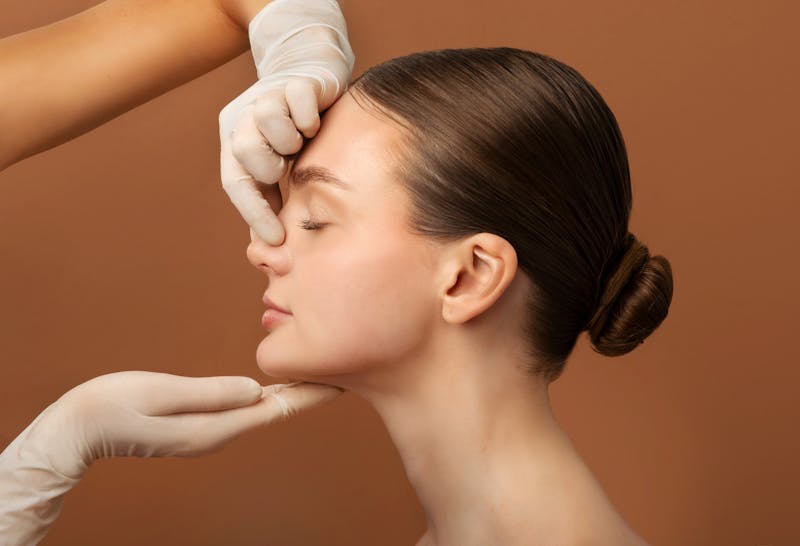
Rhinoplasty has the unique ability to enhance facial balance while also improving the way you breathe. At Shapiro Aesthetic Plastic Surgery & Skin Klinic, Dr. Daniel Shapiro, MD, FACS, brings more than thirty years of focused experience to nasal surgery. His approach blends structural precision with artistic vision, making it possible for patients to address both functional concerns and cosmetic goals in a single, carefully designed procedure. Let’s explore how form and function can be improved together.
How Nasal Mechanics Influence Aesthetics
The cosmetic appearance of the nose is directly shaped by its underlying structure. When cartilage or bone is crooked, weak, or overly prominent, the issue often affects both airflow and aesthetics. A deviated septum, narrow nasal valves, fracture-related misalignment, or irregular bridge contour can restrict breathing while also altering facial harmony.
During your consultation, Dr. Shapiro evaluates internal and external anatomy as a single system. This dual assessment ensures that any surgical plan harmonizes appearance and breathing, producing results that look natural and support comfortable airflow.
Common Structural Issues That Influence Breathing and Appearance
Many nasal concerns stem from the same underlying structural problems. These are among the most frequent contributors:
- Deviated septum: Off-center cartilage can limit airflow and create visible asymmetry.
- Internal or external valve narrowing: Weak or constricted valve support may interrupt breathing and lead to a pinched look.
- Dorsal hump: Excess cartilage or bone along the bridge affects the profile and the internal nasal passage.
- Previous fractures: Trauma can change alignment, create bumps, and obstruct airflow.
A Customized Surgical Plan for Functional and Cosmetic Needs
Dr. Shapiro customizes every rhinoplasty by evaluating anatomy, facial proportions, and functional concerns to determine the most effective approach. Depending on each patient’s needs, he may refine the bridge, adjust projection, reshape the tip, or use cartilage grafts to support airflow, ensuring the final result looks natural, feels balanced, and supports long-term nasal function. Functional issues such as a deviated septum can also be corrected when needed through septoplasty, a procedure Dr. Shapiro frequently performs in combination with rhinoplasty to optimize both breathing and aesthetics.
What to Expect from Surgery and Recovery
Rhinoplasty may be performed using an open or closed technique based on the complexity of your anatomy, with incisions placed for minimal visibility and internal adjustments made only as needed. Recovery includes temporary swelling, congestion, and changes in sensation that improve gradually over several weeks, while full refinement continues over time as the nose settles into its final shape.
When Aesthetic Refinement Supports Better Breathing
Structural adjustments designed for cosmetic enhancement often improve airflow at the same time. Straightening the bridge, correcting alignment, refining the tip, or supporting weakened valve areas can create a more open internal passage and a more balanced external appearance.
Patients who address both needs in one procedure often experience:
- A proportional, harmonious nasal shape
- Clearer and more comfortable breathing
- A single recovery instead of two separate surgeries
- Stronger long-term structural support
Meet with a Nationally Recognized Rhinoplasty Specialist
If you’re considering rhinoplasty for functional or cosmetic reasons, scheduling a consultation with Dr. Shapiro ensures guidance from a nationally recognized, board-certified plastic surgeon with extensive expertise in both nasal aesthetics and airway support. His patient-centered approach emphasizes safety, education, and meticulous planning, helping you pursue results that enhance your appearance and breathing with confidence.